Skip to content
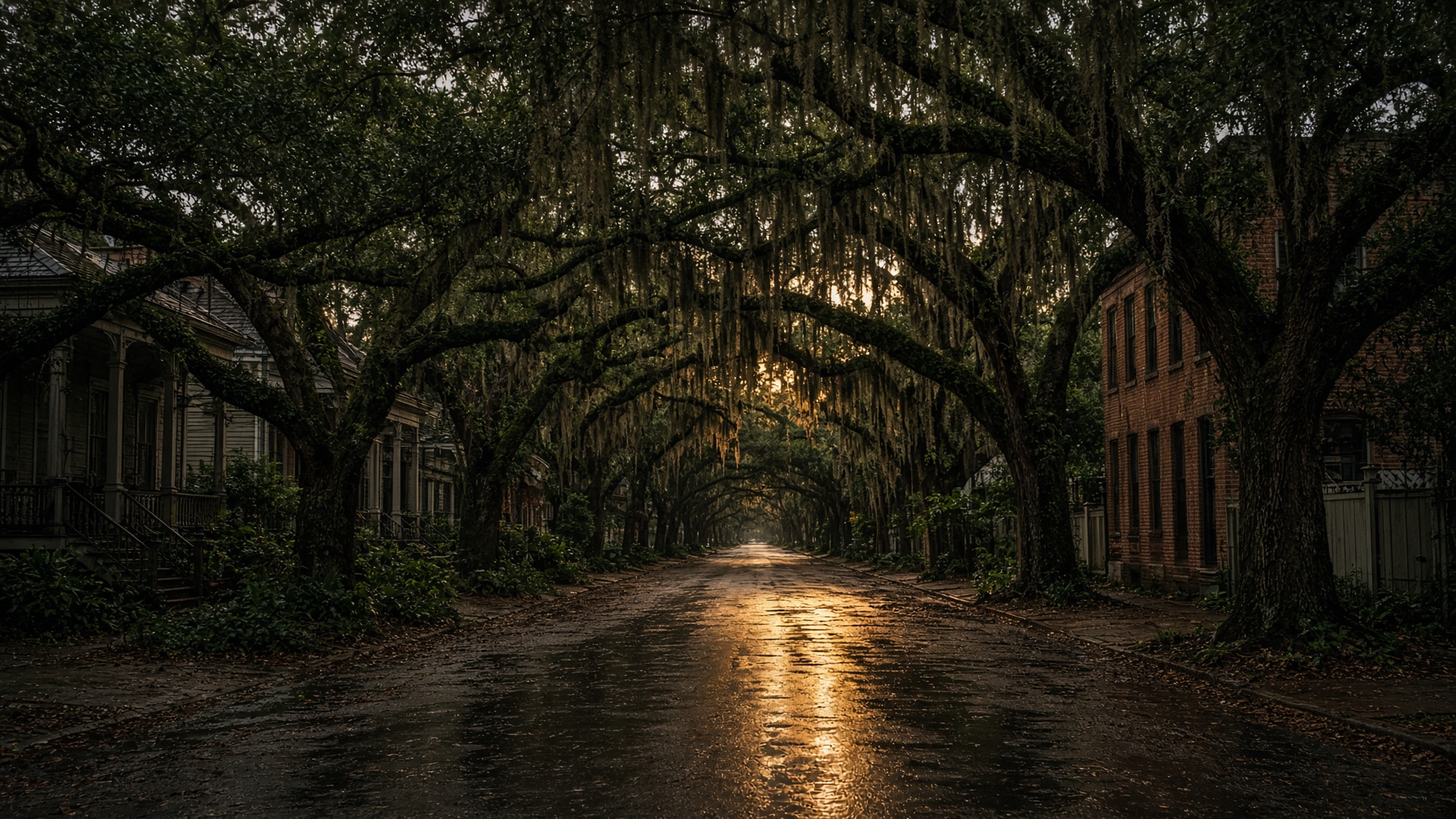
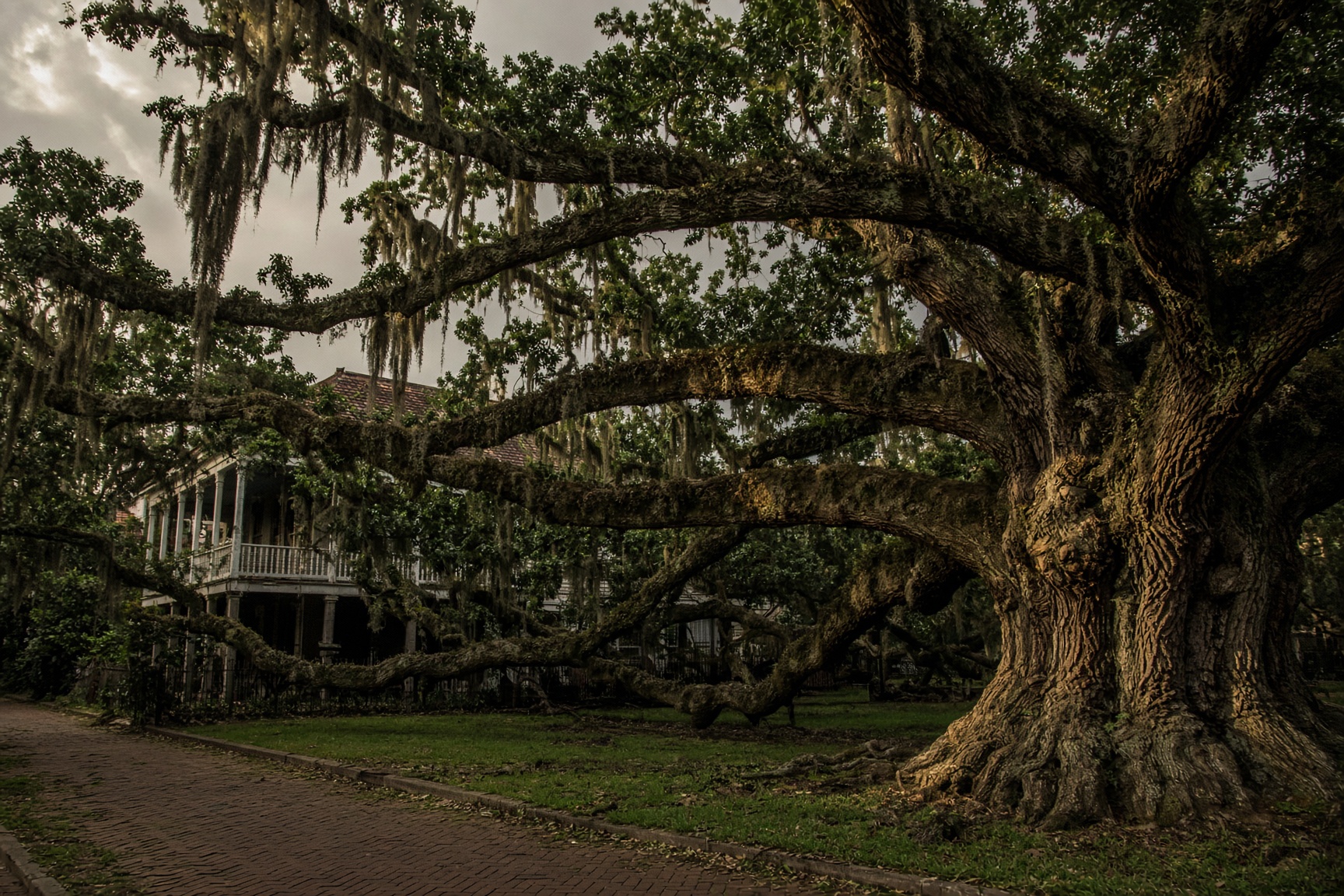
Live oaks meeting over a wet New Orleans residential street at dusk, storm light on the pavement.

Orleans Parish · twenty years after Katrina

The canopy never came back.

30%18.5%

Katrina took an estimated 200,000 trees. They didn’t grow back. New Orleans is hotter, air quality is worse, and we’re weaker when storms approach.

Pre-Katrina canopy: nearly 30% of the city in 2005 (City of New Orleans). Today: 18.5% (SOUL satellite analysis, two vendors; City of New Orleans). Katrina loss estimate: upwards of 200,000 trees (City of New Orleans; SOUL).

The drop

Katrina tore a hole in the air-conditioning of this city.

Wind and flood took live oaks, pecans, and the street trees on the neutral ground. Parkway Partners put the loss above 100,000 trees at the time. The city’s later figure is 200,000-plus. That is the range. Either number is a hole New Orleans has not filled.

A U.S. Forest Service / Nowak study found tree-and-shrub cover fell 9.6 percentage points from 2005 to 2009 — the steepest drop among 20 large U.S. cities. Cover went from 32.9% to 23.3%, a 29% reduction. From 2001 to 2021, Orleans Parish lost about 4,000 acres of tree cover, a 28% decrease since 2000. Hurricane Ida and later storms are expected to cut the percentage further once fully counted.

Loss range: Parkway Partners (100,000-plus at the time) and City of New Orleans / SOUL (200,000-plus). 2005–2009: nola.com reporting the Urban Forestry & Urban Greening study. Acres and Ida caveat: Woodwell figures cited in the SOUL Reforestation Plan. Today: SOUL satellite analysis, two vendors; City of New Orleans. City pre-Katrina figure is “nearly 30%,” which is why the share line below uses 11 points, not the Nowak 32.9.

Canopy cover, citywideBars use only the published figures
  • 2005

    Before the water

    32.9%

    USFS / Nowak

  • 2009

    After Katrina

    23.3%

    Steepest drop of 20 cities

  • Today

    Still not recovered

    18.5%

    SOUL / City

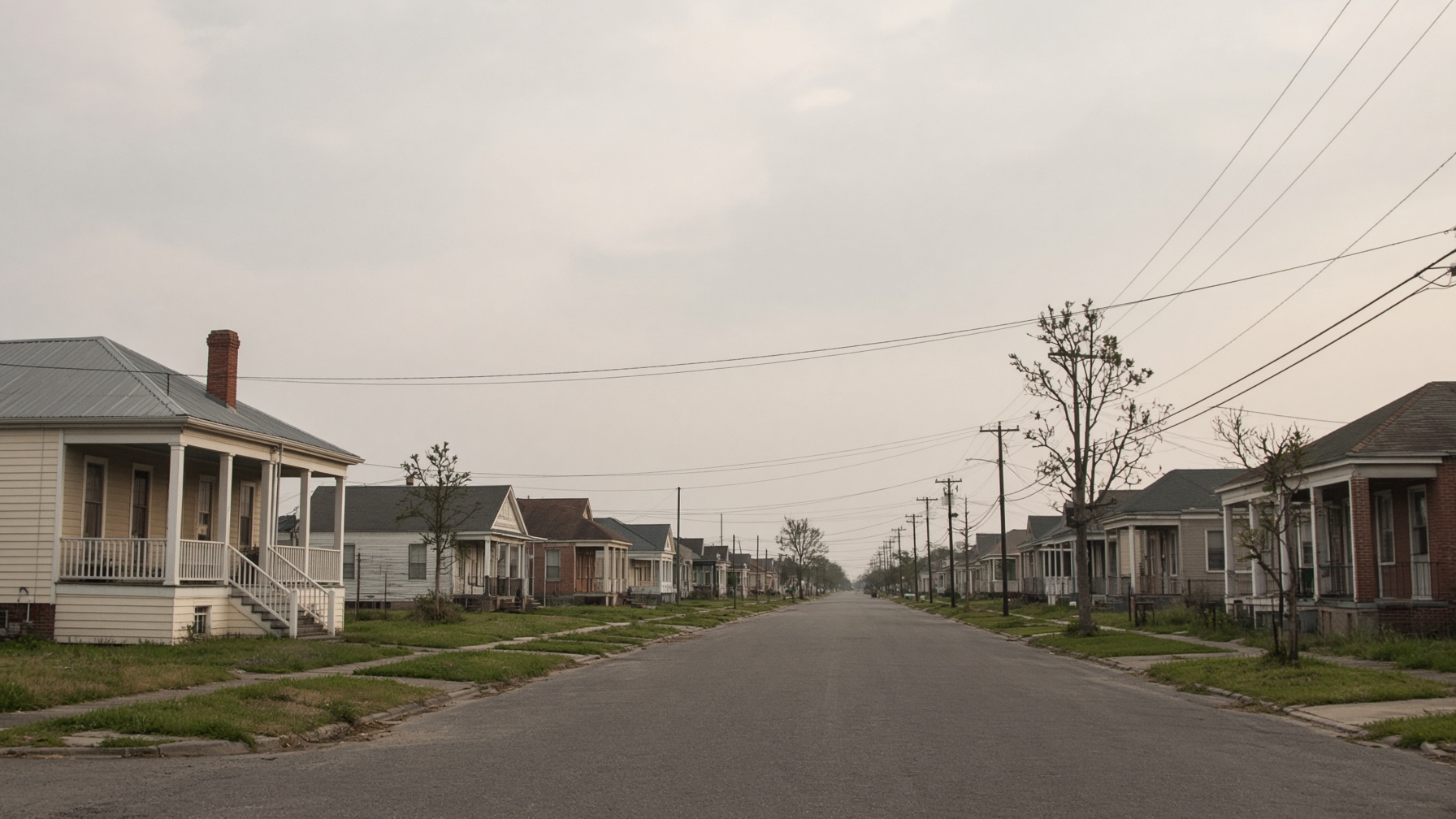
A New Orleans residential block with almost no mature tree canopy, pale sky over shotgun houses and open pavement.

Share this number

New Orleans is still 11 points below its pre-Katrina canopy.

30% → 18.5%. Not a slogan. A gap you can feel on an unshaded sidewalk.

Post itEmail it

11 points uses the city’s “nearly 30%” pre-Katrina figure against today’s 18.5% (SOUL / City). The Nowak study’s 32.9% (2005) would make the gap larger.

Why it matters

Shade is not decoration. It is how this city survives the heat, and the week after landfall.

Air & heat

9°F

hotter than nearby rural land — among the worst urban heat islands in the U.S. Some pockets run upwards of 16°F hotter.

After Hurricane Ida, heat — not flooding — was the leading cause of death when the power died and people sat in unshaded, uncooled houses. EPA: shaded surfaces can be 2045°F cooler than unshaded materials; evapotranspiration can cut peak summer air temps 29°F.

Trees also pull ozone, nitrogen dioxide, and particulate matter out of the air you breathe. Historical redlining and income track with a low Tree Equity Score and fewer trees.

Heat island: SOUL plan; ASLA. Ida deaths: ASLA / SMM. Shade temps: EPA heat-island trees page. Equity: Woodwell / SOUL.

Stormwater

21,000

gallons of rainfall a large live oak can intercept in a year.

That is water that does not sheet across asphalt into a clogged catch basin. Parks and Parkways’ public-tree inventory (i-Tree Streets) puts stormwater interception at about $2,085,774 a year, and energy savings at about $1,312,038 a year. Carbon sequestration: about $235,176 a year.

Trees slow rain, open soil for infiltration, and cut debris in the drains. A live oak on a neutral ground is drainage infrastructure with leaves.

21,000 gallons: i-Tree, cited in the SOUL plan. Dollar lines: Parks and Parkways public-tree inventory (i-Tree Streets).

Wind and recovery

Ida

Heat killed after the storm. Shade is the recovery system people actually live inside.

Trees do not stop hurricanes. They lower heat after the storm, intercept rain before it hits pavement, and in groups act as windbreaks that drop wind speed behind the line — taking energy out of wind at the neighborhood scale, not at the coast.

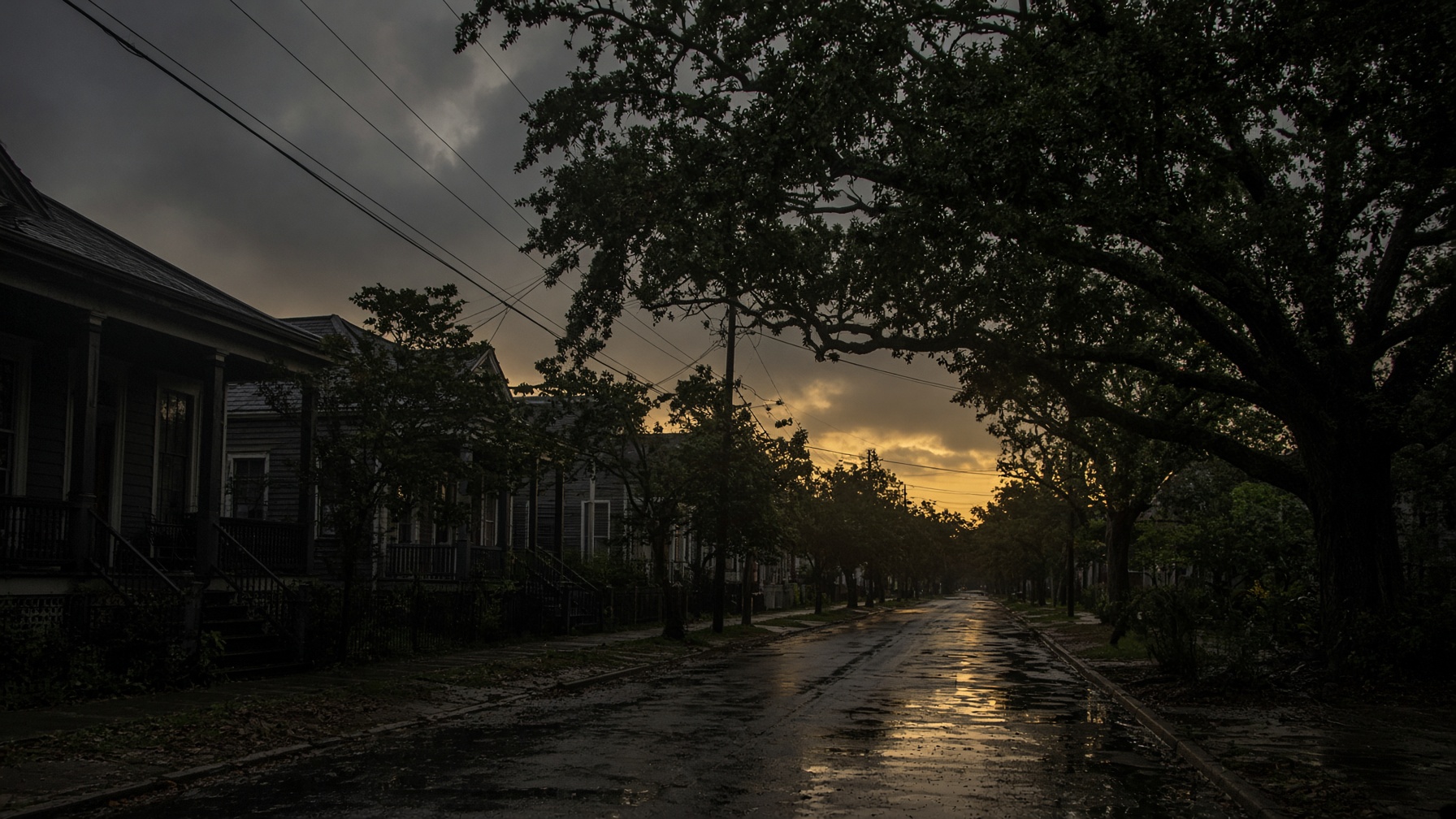
A New Orleans street at dusk after a storm, wet pavement and a break of gold light under remaining oaks.

Windbreaks and post-storm heat: SOUL plan. Ida heat deaths: ASLA / SMM. Carbon line $235,176/yr from the same public inventory.

Honesty note on air-quality dollars: the same public inventory’s i-Tree air-quality line was slightly negative (-$24,977) because of how the model scores biogenic emissions. Heat, stormwater, and energy are the stronger local numbers, which is why they lead.

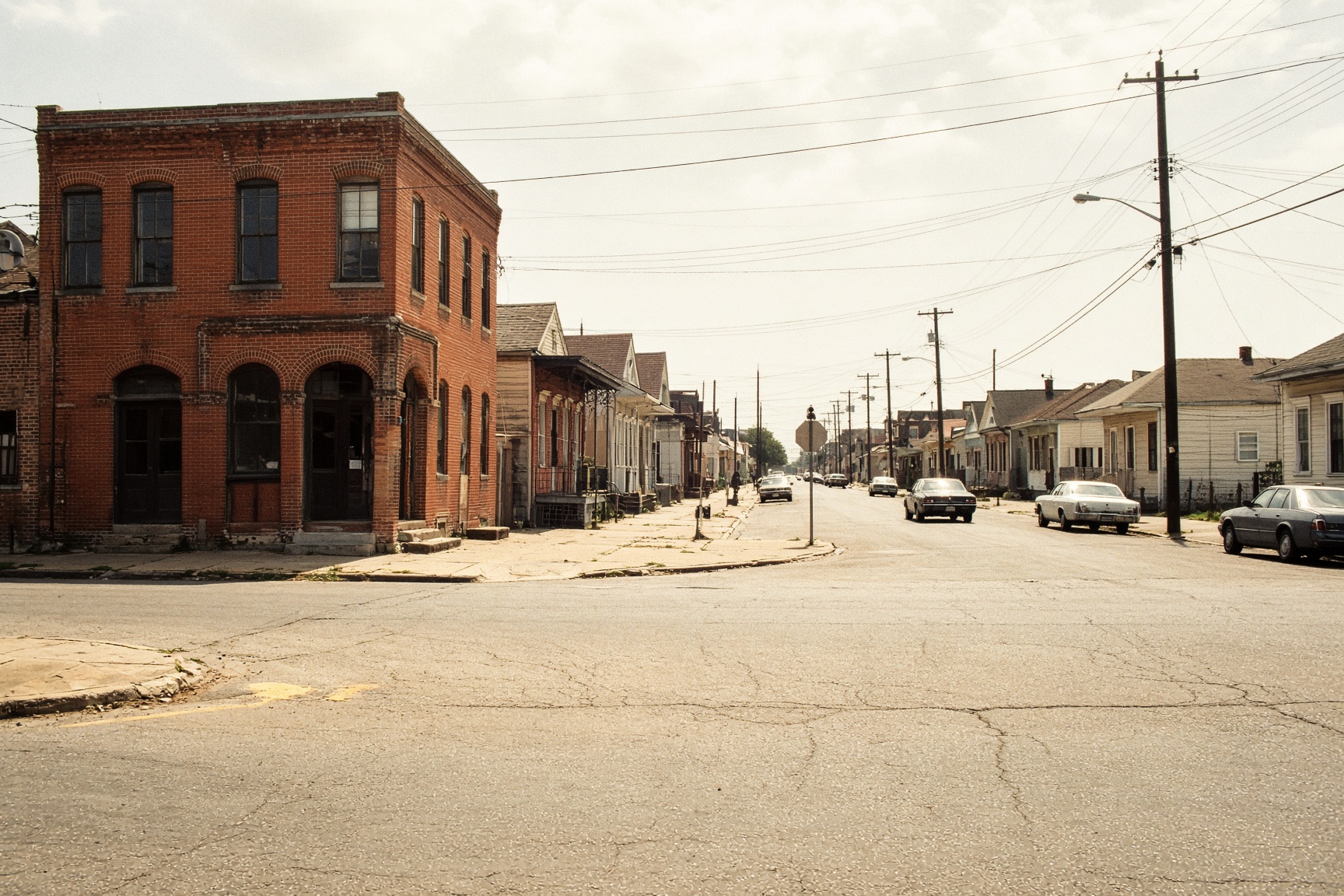
An unshaded New Orleans intersection in harsh midday sun, brick corner store and almost no mature trees.A centuries-old live oak trunk and spreading limbs over a New Orleans brick sidewalk.

Who has shade

Some neighborhoods sit near 1% canopy. The Garden District approaches 30%.

That is not a taste difference. Historical redlining and income track with a low Tree Equity Score and fewer trees. More than half of 72 neighborhoods are under the 10% floor SOUL and Spackman Mossop Michaels set for 2040. This finder will not invent a percentage for your block.

NOCTURNL target neighborhoods

$8 million USDA Urban and Community Forestry grant, 2024–2028. These are the named planting zones. No per-neighborhood percentages on these cards, because the public sources do not give us honest ones.

Carrollton corridor

Dixon, Hollygrove, Leonidas

  • Dixon
  • Hollygrove
  • Leonidas

Planting + workforce training · 2024–2028

Center city

Broadmoor, Central City, Gert Town

  • Broadmoor
  • Central City
  • Gert Town

Planting + workforce training · 2024–2028

West Bank & downriver

Algiers–Behrman, New Aurora / Lower Coast, St. Claude

  • Behrman
  • New Aurora / English Turn
  • St. Claude

Planting + workforce training · 2024–2028

Treme corridor

Desire, Seventh Ward, St. Bernard, Tremé

  • Desire Area & Development
  • Seventh Ward
  • St. Bernard Area
  • Treme / Lafitte

Planting + workforce training · 2024–2028

New Orleans East & Lower Nine

Little Woods, Lower 9th Ward, Village de l’Est, West Lake Forest

  • Little Woods
  • Lower Ninth Ward
  • Village de l’Est
  • West Lake Forest

Planting + workforce training · 2024–2028

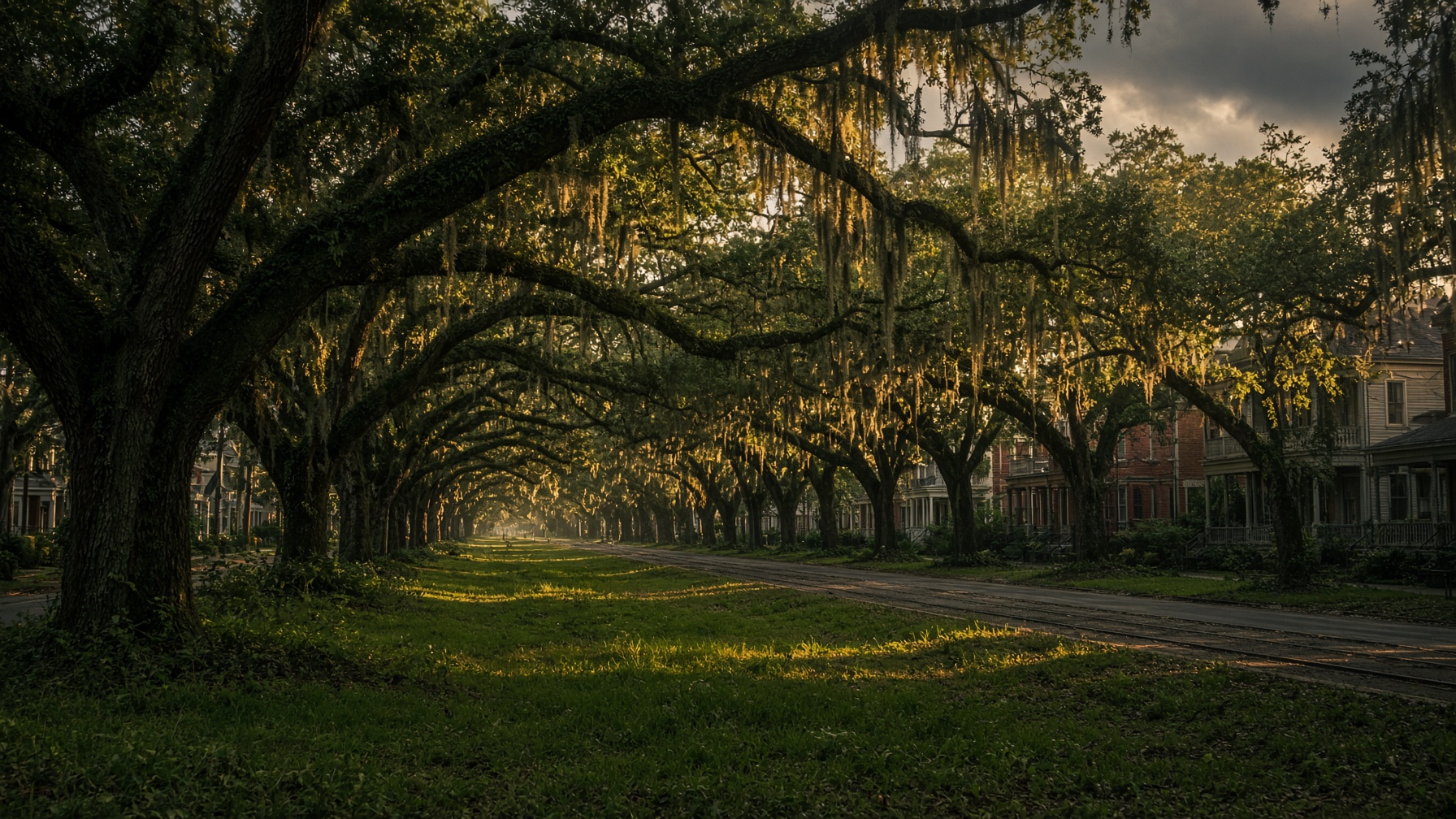
A New Orleans neutral ground lined with massive live oaks in golden storm light.

1% vs ~30%: ASLA writeup of the plan. Floor and 72 neighborhoods: SOUL + Spackman Mossop Michaels. Equity: Woodwell / SOUL. NOCTURNL list: City of New Orleans.

The target

24% by 2040. 10% in every neighborhood. 40,000 trees by 2030.

SOUL and Spackman Mossop Michaels set 24% citywide by 2040, and at least 10% in every one of 72 neighborhoods. The Climate Action Plan calls for 40,000 new trees by 2030, planted equitably.

Parks and Parkways says 24,000 trees have been counted toward that goal since 2017. The tally includes giveaways, so survival is unclear. This bar is not a victory lap.

Goals: SOUL / SMM; City Climate Action Plan. Counted trees: Parks and Parkways via nola.com. Comparison cities: SOUL / City, 10-city study averaged about 40% canopy.

Counted toward 40,000 — not “planted and alive”

Hatched fill on purpose. Giveaways are in the number.

24,000 counted since 201740,000 by 2030

60% of the 2030 count, including giveaways. Survival is not in this chart because it is not in the tally.

How we compare
  • Atlanta47%
  • Austin38%
  • Memphis37%
  • 10-city study avg.40%
  • New Orleans18.5%
  • Houston18%

Memphis 37%, Austin 38%, Atlanta 47%, Houston 18%, New Orleans 18.5%. Ten-city study averaged about 40% (SOUL / City). SOUL plan.

Money already in motion

This is happening. It is not enough.

Grants plant trees. They do not water them through the heat, prune them off the power lines, or replace the ones that die. Parks and Parkways maintains street trees, park trees, and trees between sidewalk and curb. Maintenance funding is the bottleneck — 2026 budget testimony — not just planting.

$8 million

USDA Urban and Community Forestry — NOCTURNL

2024–2028

Plant in underserved neighborhoods and train urban forestry workers.

Part of $50 million

EPA Climate Pollution Reduction Grant

2024

Plant 5,000 trees, plus the city’s annual nonprofit planting grant.

$3.5 million

HUD CDBG-DR (Ida recovery)

2024

2,000+ trees in Central City.

NOCTURNL: City of New Orleans. EPA CPRG and HUD CDBG-DR figures as stated by the city / plan coverage in 2024. Maintenance bottleneck: 2026 budget testimony.

What you can do this month

Get in line before the next planting window.

Request the tree. Report the dead one. Put your name on a Saturday crew. Send the 18.5% figure to Council before the next budget cycle pretends planting is the same as a canopy.

Request a street tree

Parks and Parkways plants and maintains trees between sidewalk and curb. Ask now so you are on the list for the next planting window.

City tree page

Attend a planting

SOUL’s next planting season runs October 2026–March 2027. This month: get on the volunteer list. Saturday crews do the work the grants cannot.

SOUL volunteer sign-up

Report a dead city tree

A standing dead street tree is a storm missile. Route it through 311 — tree service on public property and rights-of-way.

NOLA 311 tree service

Donate where trees actually go in the ground

SOUL writes the plan and plants block by block. Parkway Partners has been doing this work since before Katrina. Neither is this website.

Email this page to Council

Opens your mail app with a letter to the Clerk of Council and central staff. No fake form. No pretend “submit to the city.” Find your district member on the Council site if you want it on a named desk.

Tree emergencies after hours: Parks & Parkways via 311 or (504) 658-3200.